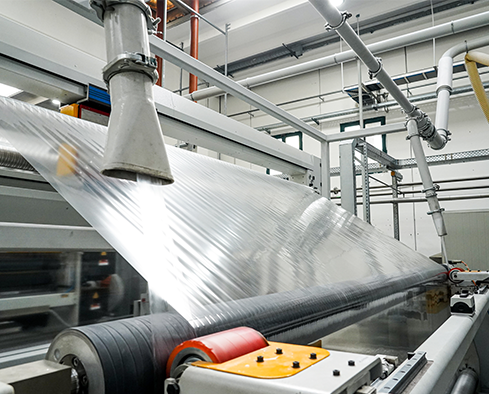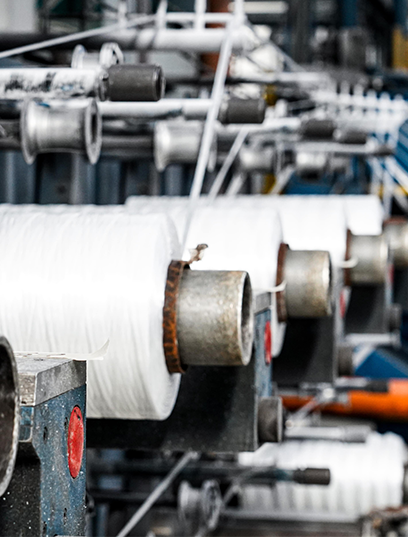


Analyzing the characteristics of polypropylene highlights the fact that it is one of the most versatile materials, with a wide range of applications across various industries.
Polypropylene yarns can be used for industrial purposes, such as the production of ropes, cords, nets, and technical fabrics, as well as other types of yarns that must withstand extreme mechanical, thermal, and environmental stress. This is thanks to polypropylene’s high resistance to compression, chemicals, and high temperatures (up to approximately 120°C). It is a non-toxic, recyclable material that offers excellent performance in both thermal insulation and mechanical strength.
Thanks to its insulating properties—its thermal conductivity coefficient (λ) is 0.039 W/mK—polypropylene is also ideal for food packaging, helping protect and preserve food from thermal stress. Moreover, due to its resistance to high temperatures, polypropylene can be washed, ensuring maximum cleanliness and hygiene for reuse, without retaining odors.
Its structure makes it particularly effective in absorbing impacts, allowing it to easily return to its original shape. It also remains stable when in contact with aggressive chemicals such as acids, organic solvents, gasoline, diesel, and other petroleum derivatives.
Properties of Polypropylene
Polypropylene has excellent thermal conductivity, often making it preferable to polystyrene. Additionally, polypropylene packaging is non-toxic and contains neither CFCs (chlorofluorocarbons) nor HCFCs (hydrochlorofluorocarbons). It can be washed in dishwashers at high temperatures, ensuring maximum hygiene. Since it contains no nutrients, it does not promote the growth of fungi, bacteria, or other microorganisms.
The lifespan of polypropylene packaging is virtually unlimited, and it can be manufactured in a wide variety of shapes and sizes for multiple applications, including in the food, medical, textile, and industrial sectors. Environmental factors do not alter the properties of polypropylene, which is fully recyclable and can therefore provide consistent performance over an indefinite period.