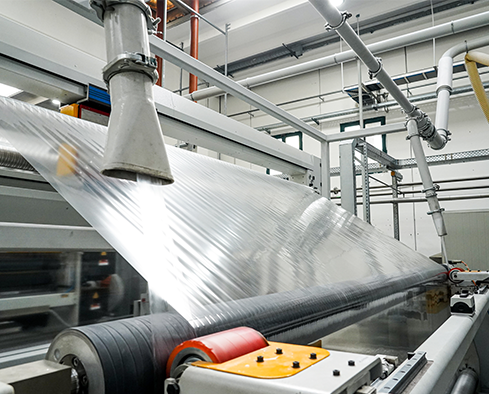


Cast polypropylene (CPP) film is a flexible material produced through a direct extrusion process. This polypropylene-based plastic film is known for its excellent processability, as well as its strong optical and mechanical properties.
What Is CPP Film and How Is It Made?
Cast polypropylene film is produced using a flat die extrusion process. Molten polypropylene is extruded through a T-die and rapidly cooled directly on a chilled roll, resulting in a smooth, uniform film with consistent thickness. This cooling process also gives the film good transparency and a high-quality finish. Unlike BOPP (biaxially oriented polypropylene), CPP film is not mechanically oriented, which allows it to maintain greater flexibility.
CPP film can undergo further processing, such as printing, lamination, and conversion into bags and pouches.
What Are the Technical Characteristics of Cast Polypropylene Films?
Widely used in various applications, cast polypropylene films are primarily employed for food packaging (bread, pasta, fruits, and vegetables), as well as in other flexible packaging, lamination, and printing applications. The manufacturing process ensures a consistent film thickness, providing uniform performance across different uses.
CPP films offer excellent transparency, making them ideal for packaging applications where product visibility is important (such as in food packaging). They also have relatively low density, allowing for the production of lighter films compared to materials like cellophane or polyester.
All CPP films feature good resistance to impact, stress, and puncture, as well as resistance to moisture and chemical agents—helping to preserve the quality of packaged goods, even those requiring extra durability.
They are easily heat-sealable, making them suitable for pouch and bag production, even at lower temperatures. CPP films can withstand moderate temperatures, generally ranging from -40°C to +80°C. Common applications include packaging for dairy products, cheese, and fresh foods; bags for frozen goods and ovenable products; and laminated films for snacks and bars.
Advantages of Using Cast Polypropylene
CPP film is frequently used as the heat-sealable inner layer in multilayer laminates, particularly where sealing integrity and moisture barrier are essential. It is often chosen for the following strategic advantages:
- High application versatility, thanks to customizable thickness
- Surface treatment options for improved adhesion of adhesives and inks
- Compatibility with high-speed machines, enhancing production efficiency
Cast polypropylene film is one of the most reliable solutions for food packaging. It delivers high performance, cost-efficiency, and the ability to integrate into sustainable packaging systems.