

In the industrial context of food packaging, the choice of packaging material holds strategic importance for ensuring the protection, preservation, and optimal presentation of products. Cast polypropylene film (CPP) represents a widely used polymer solution due to its inherent properties. However, selecting the best CPP film requires a thorough technical evaluation of several critical parameters.
This article aims to provide a detailed guide on the fundamental characteristics, advantages, and selection criteria for identifying the most suitable CPP film to meet the specific packaging needs in the food sector.
CPP Film for Food Packaging: Fundamental Properties
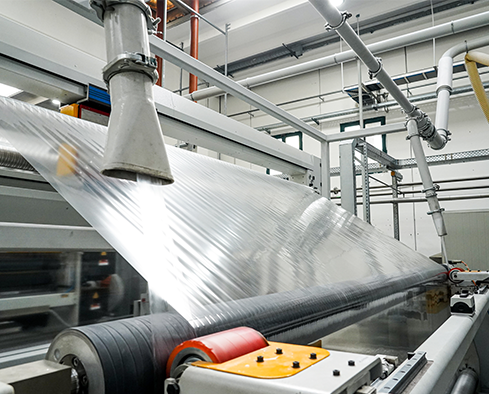
Cast polypropylene (CPP) is a thermoplastic material extensively applied in food packaging by virtue of attributes such as high transparency, controlled thermal resistance, and efficient processability. The use of CPP film allows addressing product visibility requirements and, in certain applications, compatibility with post-packaging heat treatments.
For food packaging applications, a quality CPP film must exhibit the following technical characteristics:
- High Transparency
- Optimized Thermal Resistance
- Controlled Coefficient of Friction
- Excellent Weldability
- Compliance with Food Contact Regulations
Advantages of Using Cast Polypropylene in Food Packaging
The adoption of CPP film in food packaging entails a series of technical and operational benefits:
- Improved Food Preservation: The barrier properties of CPP film against moisture and specific gases significantly contribute to extending the shelf life of packaged food products.
- Versatility in Industrial Packaging Technologies: Cast polypropylene film exhibits high compatibility with various automated packaging technologies, including horizontal and vertical flow-pack, thermoforming for rigid or semi-rigid container production, and heat-sealing systems for flexible packaging closure. It is also suitable for modified atmosphere packaging (MAP) and vacuum packaging applications.
- Environmental Sustainability: CPP is an intrinsically recyclable material, offering a potential contribution to reducing the overall environmental impact. The evolution of the sector includes the development of CPP films based on renewable resources or with an improved eco-sustainability profile.
Technical Criteria for CPP Film Selection
The choice of the most appropriate CPP film for a specific food packaging application must be based on a rigorous evaluation of the following technical factors:
- Nature of the Food Product: The physical-chemical characteristics of the food (physical state, oxygen sensitivity, moisture content, etc.) determine the barrier requirements, the necessary thermal resistance, and the most suitable type of packaging. For example, the packaging of fresh dairy products may require a CPP film with high oxygen barrier properties.
- Industrial Packaging Process: The technical specifications of the packaging machines employed (operating speed, sealing system, film tensioning requirements) influence the choice of cast polypropylene film in terms of the coefficient of friction and weldability characteristics.
- Storage and Shelf-Life Requirements: The desired shelf life for the product and any need for post-packaging heat treatments necessitate the selection of a CPP film with adequate thermal resistance and barrier properties.
- The level of transparency and gloss of the CPP film must be evaluated in relation to the product visibility needs and marketing objectives.
- Regulatory Compliance and Certifications: It is imperative to verify the compliance of the CPP film with current regulations regarding food contact materials and to request the relevant certification documentation.
Sustainability: In addition to technical performance, it is necessary to evaluate the cost of the material and the options for recyclable CPP film or those with a more favorable environmental profile, in line with company sustainability policies.